
PreHistory
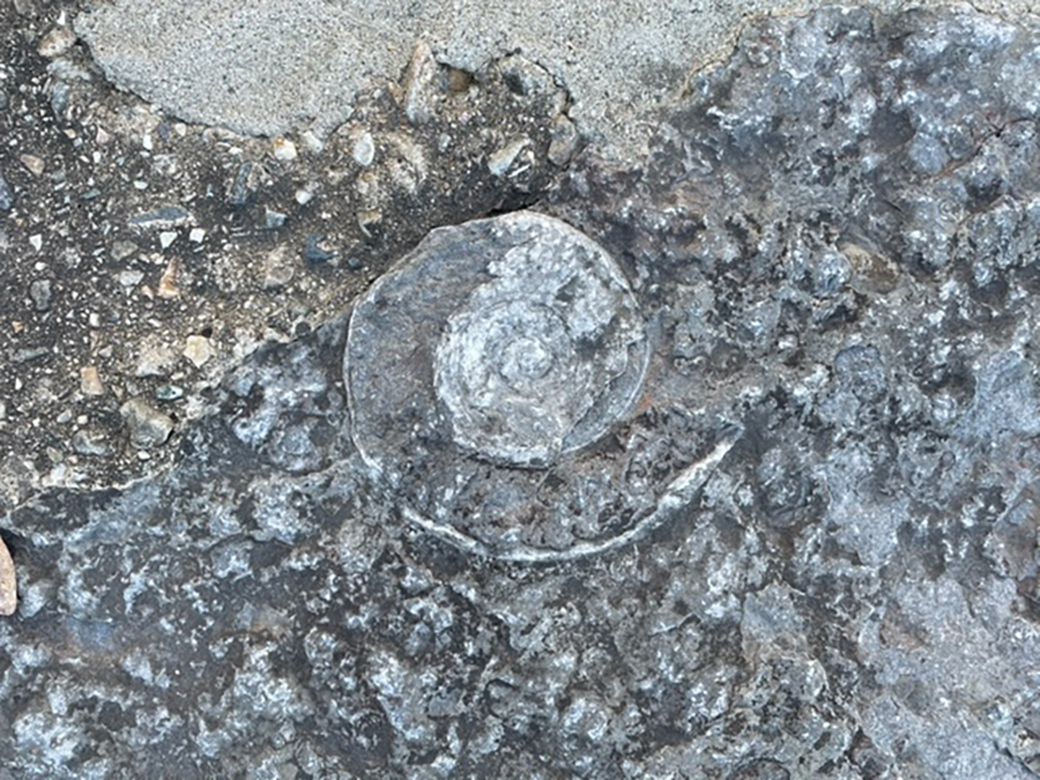
Over two million years ago, a glacier a mile thick covered the land that is now Shelburne Farms. As it receded, an enormous lake submerged the area, then a shallower brackish sea. Streams and rivers cut deep channels through the rock, and soil began to form. Lichen arrived, then spruce, fir, and birch trees. By 10,000 BP (before present), Paleoindians were here, relying on the region’s waterways and settling seasonally as they followed the migrations of herd animals. By 2,900 BP, new agricultural tools and techniques allowed Native Americans to create more regional and permanent settlements.
Read more about geology
First Peoples (17th century)
As descendants of the earliest PaleoIndians, the Abenaki are the first people of this land they call N’dakinna, or “Our Land.” For much of the 17th century, they hunted, fished, and gathered food in the region. Like their ancestors, the Abenaki relied on the lakes and streams for transport and game, living in seasonal villages alongside these waterways. The land, the creatures living here, and the big lake Bitawbágók—”Waters that Lie Between”—were all essential to the Abenaki livelihood, culture, and cosmology. Land was—and continues to be—their kin.
Read our Land Statement
Settler Colonialism (18th century)
By the time the Town of Shelburne was chartered in 1773, Europeans were already bringing enormous change to the area. They pushed out, destroyed, suppressed, or assimilated many Abenaki people, though communities survived on existing shoreline settlements. By 1790, the town recorded nearly 400 residents. Colonialist settlers built mills and cut forests for farmland devoted to sheep, and other crops. They honored their European roots by dismissing Abenaki names and renaming the places around them. Bitawbágók was renamed Lake Champlain in honor of French explorer Samuel de Champlain.
Farming in Shelburne (early- mid-19th century)
By mid-century, Shelburne had over 1,000 residents and over 17,000 sheep on the land. But as railroads and settlers moved west, cheap western wool compelled many Shelburne farmers to diversify into dairy farming and orchards—or to head west themselves. The railroads driving this shift made the Vanderbilt family fortune, which would soon underwrite the creation of Shelburne Farms. The patchwork of homesteads—some thriving, some struggling, together with a continued Abenaki presence on Shelburne Point—was the landscape when the Webbs arrived in 1886.
More about merino sheep in Vermont
Shelburne Farms Begins (late 19th century)
Eliza Osgood “Lila” Webb was the youngest daughter of William H. Vanderbilt, one of the world’s wealthiest men when he died in 1885. Her inheritance enabled her and her husband, William Seward, to realize their personal vision for a grand agricultural estate in Shelburne. Over more than a decade, they purchased 33 farms—nearly 4,000 acres—along Shelburne Point. Families of original settlers—Tracy, Hart, Saxton, and Comstock to name a few—sold their farms to the Webbs, whether seeking prosperity or feeling pressured. The enduring name of Shelburne Farms plural reflects this history of consolidation.
From Many Farms to One Farm (1886-1905)
Underwritten by Lila’s fortune, another landscape transformation began. Hundreds of laborers removed most of the original farm buildings, eliminated boundary walls, plowed under existing roads that linked to town, constructed new ones, and planted acres of trees, such as elms, maples, and pines. Even the terrain was reshaped: an 1892 ledger records costs for “removing Hurlbert Hill.” The Saxton family’s land became a house site; greenhouses were built on the former Hart Farm. Frederick Law Olmsted Sr. developed the conceptual plans that guided this land transformation. Robert H. Robertson designed over 30 estate buildings to occupy it, and Farm Manager Arthur Taylor orchestrated the vision.
Read more on Olmsted’s influence at Shelburne Farms
Read about the man behind the plan
Shelburne Farms Heyday (1880s-1936)
Agriculture was a throughline between the earlier farms and new estate, though on vastly different scales with vastly disparate resources. The Webbs invested in innovative equipment, tools, labor, and technologies to enhance production and efficiency across a staggering range of operations: horse-breeding, a dairy, sheep flock, a piggery, chickens, hay and grain crops for feed, and extensive gardens and greenhouses. And the property was also a home for relaxing and entertaining. The new roads were specifically laid out to offer delightful carriage rides to the Webbs and their guests. Their private golf course was maintained near their lakeshore home, where Lila also tended expansive flower gardens. But the heyday was brief.
Farm Fracturing (1936-1960s)
As the 20th century progressed, the estate’s complex, labor-intensive operations became increasingly unsupportable and were scaled back, especially after Lila Webb’s death in 1936. The consolidated land ownership would likewise change. Under financial pressures and the realities of inheritances, separate parcels were bequeathed, sold, or transferred to others. But the core property remained intact, and family members remained committed to farming at a reduced scale, primarily dairy and sheep. The immense buildings, however, required investments beyond the means or inclination of later generations. Many fell into disrepair.
More on Derick Webb's challenges and vision for the farm
Nonprofit Stewardship
The nonprofit Shelburne Farms was formed in 1972 by fourth generation Webb siblings, and the property was bequeathed to it in 1986. It took the estate’s historic idea–as a place to showcase agriculture–in a direction adapted to the realities of the day: as a place to repair society’s frayed relationship to agriculture and nature. Even as it repurposed gardens and pastures into classrooms for learning, it fostered local agriculture: the nonprofit helped to establish the area’s first community gardens and the Burlington Farmers Market, hosted a cooperative spinnery and a community canning kitchen sponsored by Garden Way Associates, and housed a bakery and wood shop that continue to this day.
More on origin of the nonprofit
Current Day: A Campus for Learning
The nonprofit’s tenure with the land has been marked by a deep commitment to sustainable agriculture, healthy local food systems, and above all, to education. Shelburne Farms has built a thriving farm–dairy, cheesemaking, sugarmaking, and organic gardens. With amazing donor support, the nonprofit has renewed and repurposed its historic buildings, including the Shelburne Farms Inn, and its education programs now have a global reach, most recently through the creation of the Institute for Sustainable Schools. Its working farm campus continues to welcome learners and visitors to join us in connecting to–and caring for–the earth we all depend on.
More about our farm campus

In Gratitude